59% of Americans Will Leave Their Homes Unattended During the Holidays, Increasing Risk of Property Damage

El Niño is expected to raise flood risk in parts of the U.S. this holiday season, adding another wintertime threat alongside break-ins and fires.

Matt Brannon
Writer: Matt BrannonSenior Economic Analyst, Licensed Insurance Agent

Qualifications:
  • 11+ years in content creation

  • 4+ years in business and financial services content

  • NPN: 22276396


Matt is a senior economic analyst and insurance correspondent at Insurify. His work is cited by media outlets nationwide.

Evelyn Pimplaskar
Editor: Evelyn PimplaskarEditor-in-Chief, Director of Content

Qualifications:
  • 10+ years in insurance and personal finance content

  • 30+ years in media, PR, and content creation


Evelyn leads Insurify’s content team. She’s passionate about creating empowering content to help people transform their financial lives and make sound insurance-buying decisions.

Published

Why you can trust Insurify: Comparing accurate insurance quotes should never put you at risk of spam. We earn an agent commission only if you buy a policy based on our quotes. Our editorial team follows a rigorous set of editorial standards and operates independently from our insurance partners. Learn more.

The holidays come with some baked-in expenses: food, gifts, and decor, to name a few. But the most costly part of the holiday season could be dealing with a home break-in, fire, or flood.

Flood damage is in focus this year with the arrival of a potential record-strength El Niño. Meteorologists say the naturally occurring weather pattern could bring more snow and rain across the southern states and California.[1] 

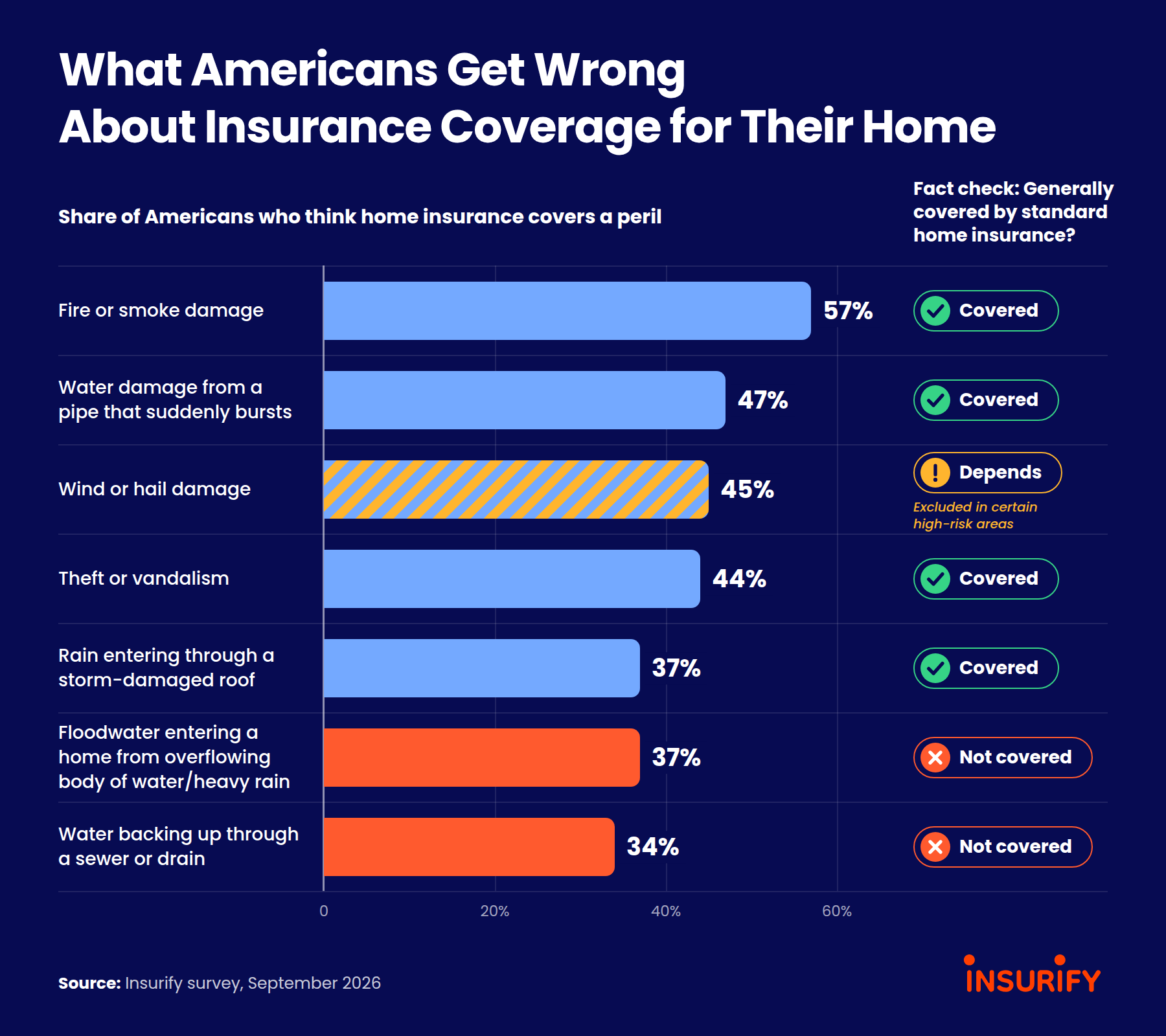
That could be a big problem for homeowners. A new Insurify survey found that nearly 2 in 5 Americans (37%) mistakenly believe their home insurance covers flood damage. In reality, home insurance generally excludes weather-related flood damage. For that, Americans would need flood insurance. And most homeowners, even those in flood-prone areas, don’t have that coverage.

Flooding and other home emergencies can go from bad to worse if no homeowner is present to respond. As holiday travel ramps up, nearly 3 in 5 Americans (59%) will spend at least one night away from home over the holidays, and most don’t ask someone to check on their property, according to Insurify’s survey.

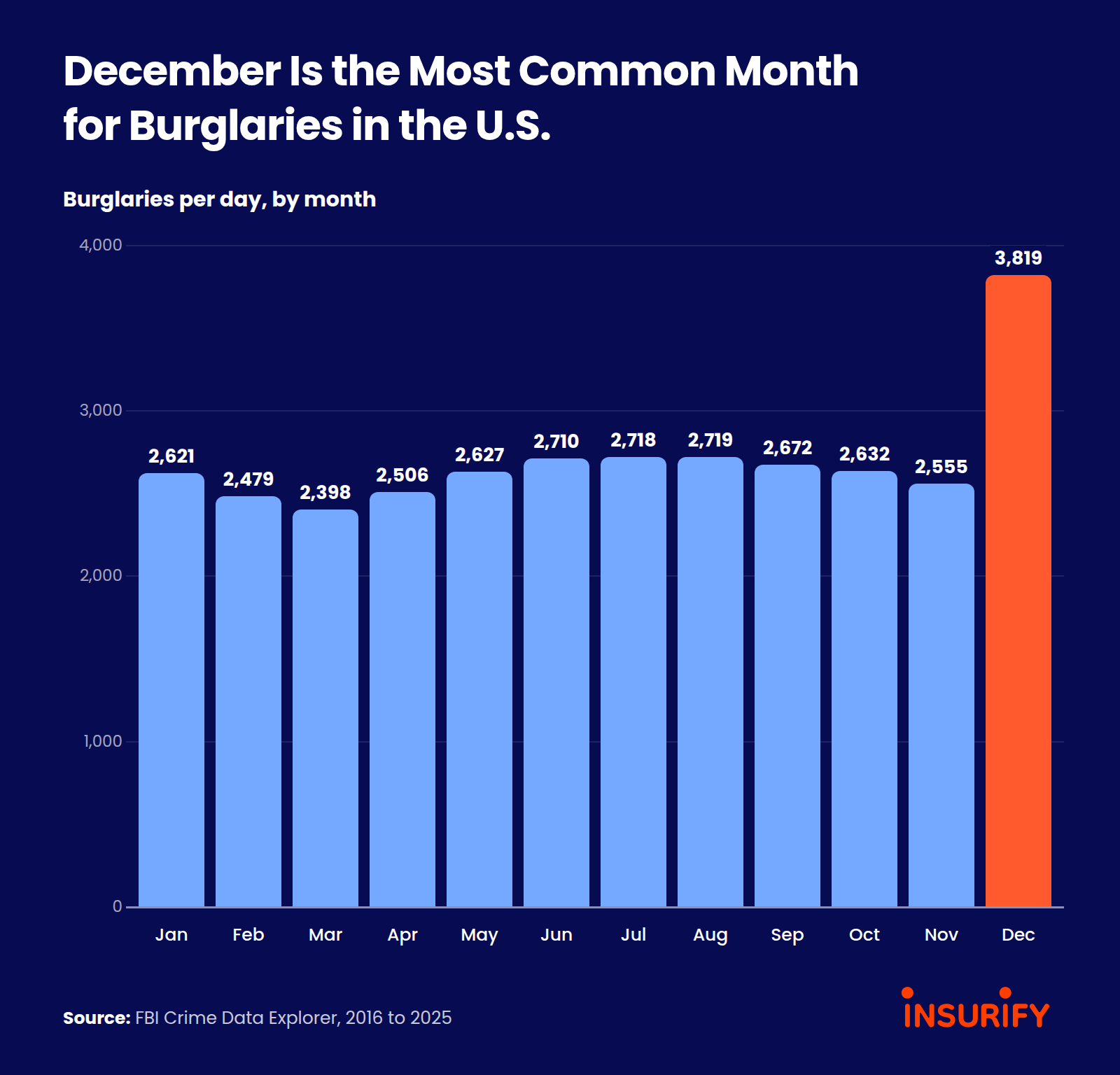
As a result, holiday travel can raise the risk and cost of property damage. But natural disasters aren’t the only threat. Frozen pipes can burst from cold, and burglaries are more common toward the end of the year. December is also a common time of year for house fires.

A lack of preparation for extreme weather, theft, and other dangers could leave less-vigilant homeowners facing big financial losses this winter.

Key findings

  • About 3 in 5 Americans (59%) plan to spend at least one night away from home during the holidays, which can make their homes more vulnerable to break-ins or other emergencies.

  • More than one-third of Americans (37%) incorrectly believe that standard home insurance will cover floodwater entering their home, including 54% of Gen Z. Generally, home insurance policies exclude flood protection.

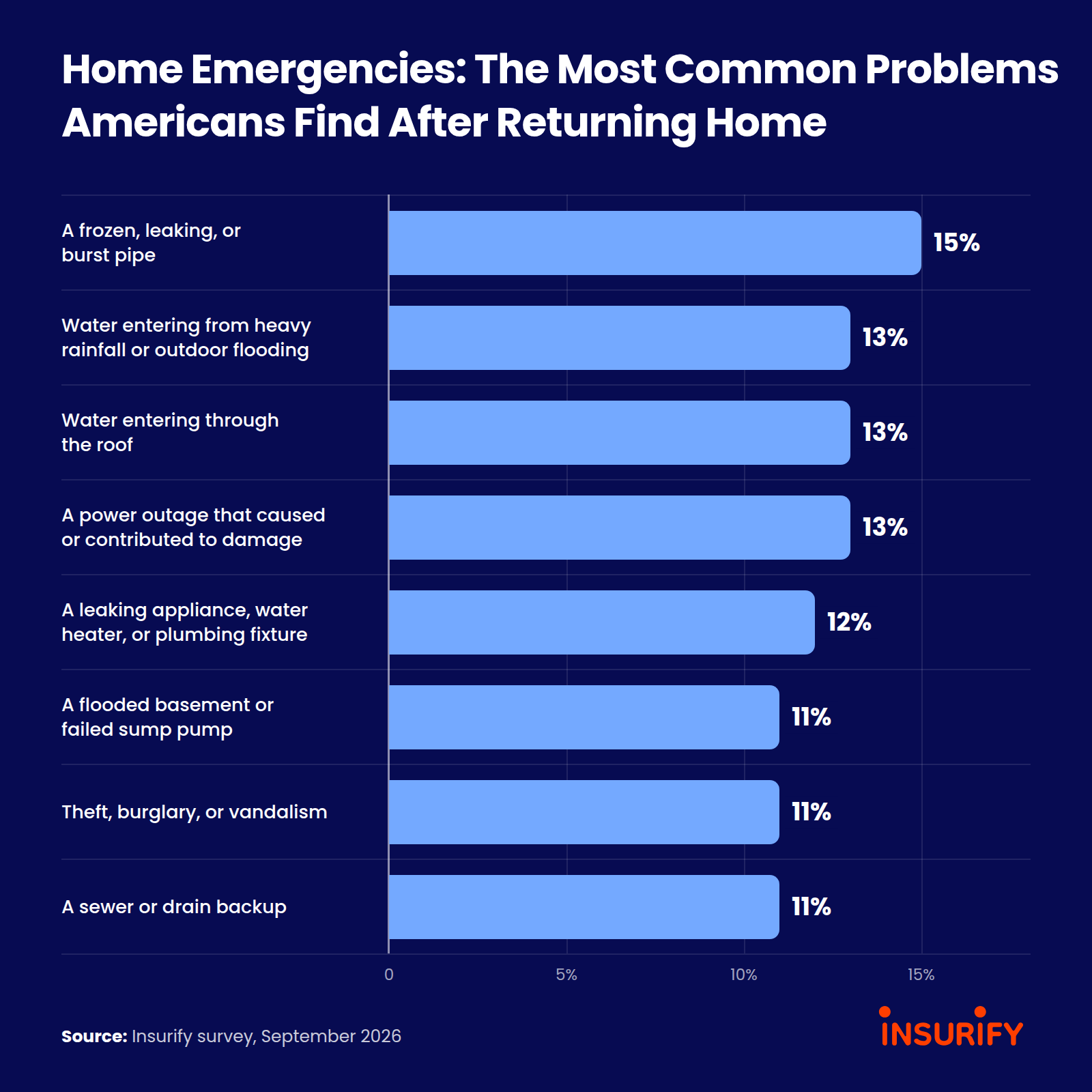
  • A little less than half of Americans (44%) have returned from a night away from home to find damage in their living unit, such as a broken pipe (15%), a leaking appliance (12%), or theft/vandalism (11%).

  • House fires are frequent during the holidays. About 12% of Americans have left food cooking unattended, and the three most common days for cooking fires take place during the holidays.

37% of Americans think home insurance covers flooding. A Record El Niño could test that this holiday season

Americans facing a household emergency can avoid hefty financial consequences with the proper insurance.

But as premiums have risen in recent years, more Americans have skipped flood insurance.[2] The timing isn’t great. The National Weather Service reports there’s an 83% or greater chance El Niño takes on record strength between October and December this year.[3]

Many Americans who assume they have coverage for flood damage may face a financial blow if El Niño affects their home. Insurify’s survey found that 37% of Americans mistakenly believe standard home insurance covers flooding caused by rising water. That can be a costly oversight, as just 1 inch of floodwater can cause up to $25,000 in damage to a home.[4]

California has proactively declared a state of emergency in anticipation of El Niño.[5] Yet nearly 39% of people who live in Western states wrongly believe that home insurance would cover flooding from rising water, the highest share for any census region. In the South — another area that could see more rain — 36% wrongly think home insurance would cover the damage, rather than flood insurance.

Home insurance policies generally exclude damage from rising floodwater. But they can cover rain damage if wind or hail creates an opening in a roof or window. Flood insurance, meanwhile, would cover water that accumulates on the surface outside the home and then flows inside.

Most properties that may need flood insurance don’t have it, even as much of the U.S. faces a wetter winter. About 92% of at-risk properties don’t have a publicly backed flood policy, according to the Congressional Budget Office.[6] (Private policies are rare and skew toward more expensive properties.)

Homeowners can mitigate weather effects if they know what’s coming. But Insurify found that about 50% of Americans don’t check the weather before an overnight trip. As a result, they could return home to unexpected floodwater or other problems in their unit.

Burglary, flooding, and frozen pipes: Nearly half of Americans have returned home to unexpected problems

Homeowners can limit property damage when they’re home, since they can deter break-ins and respond to emergencies faster. That’s one reason why some insurers provide premium discounts to seniors, who tend to spend more time at home.

For the same reason, overnight travel can heighten certain risks for homeowners.

About 59% of Americans said they’ll leave their homes unattended for at least one night this holiday season. Of those travelers, just 40% typically ask someone to check on their home while they’re gone. Some burglars take advantage of this. On an average December day, the U.S. sees 3,819 burglaries — 1,100 more than the second-place month (August, with 2,719), according to 10 years of FBI data.[7]

In fact, about 11% of Americans say they’ve returned from an overnight trip to find their home burglarized or vandalized. Young adults could be at heightened risk. Gen Z is about twice as likely as older generations to report coming home to evidence of burglary or vandalism (21%). One explanation is that they’re more likely to travel overnight for the holidays (83% of Gen Z; 74% of millennials) compared to baby boomers (37%).

Overall, 44% of Americans have returned from a trip to find their home damaged. Water damage is a common culprit. About 39% of Americans have returned home to find some form of water damage — the most common variety being a frozen, leaking, or burst pipe (15%). About 13% report having discovered water entering through the roof, and another 13% report finding water damage from heavy rainfall or outdoor flooding.

Insurify’s survey showed that 16% of those in the South have returned home from a trip to find water in their homes from outdoor flooding or rain. In the West, it’s 13%. Those numbers could soon rise once El Niño ramps up, as projected.

Tips: How homeowners can protect their property and finances during the holidays

As holiday decorations go up, homeowners can’t afford to let their guard down. People can limit their chances of a home emergency during the holidays by taking a few proactive steps.

  • Before traveling, homeowners should establish a way of keeping an eye on their property. That can mean installing doorbell or security cameras, or asking someone they trust to regularly visit or stay at their home while they travel.

  • Homeowners should make sure they have a relatively recent inventory of their items. They can do this with a written list, photos, or video walkthrough of the home. That way, if their property does suffer water damage, they have an accurate accounting of their belongings for an insurance claim.

  • Fire danger is often greater during the holidays, for example, due to electrical malfunctions and unattended cooking. “When you go to sleep or leave the home, unplug all lighting. It’s the safest way to protect against any associated risks,” Susan McKelvey, communications manager for the National Fire Protection Association (NFPA), told Insurify. The NFPA reports that the three most common days for cooking fires are Thanksgiving, Christmas Day, and Christmas Eve, in order.[8]

  • Every few months, homeowners should review their insurance information so they know whether they have coverage for potential threats and aren’t overpaying for their policy. Home insurance companies can have very different rates, so comparing quotes from different insurers can help homeowners save money on premiums.

Methodology

The proprietary data featured in this study comes from an online survey that Insurify commissioned. The survey’s respondents consisted of 1,000 U.S. residents between 22 and 70 years old who own or lease a car. The survey asked respondents up to 15 questions about their holiday habits and finances, among other topics. The survey fieldwork took place Sept. 18–23, 2026.

For media inquiries or questions about our study, please contact the author here.

Sources

  1. Live Science. "US heading for unprecedented El Niño winter: Here's what to expect."
  2. GAO. "Flood Insurance: Congressional Action Could Help Increase Coverage for At-Risk Properties."
  3. NWS. "E Niño/Southern Oscillation (ENSO) Diagnostic Discussion."
  4. FEMA. "Understanding the Fundamentals: The Real Cost of Flooding."
  5. Governor of California. "Governor Newsom proclaims state of emergency to bolster statewide El Nino preparedness, protect California."
  6. CBO. "Flood Insurance in Communities at Risk of Flooding."
  7. FBI Crime Data Explorer. "Buglary Reported by Population."
  8. NFPA. "December is a leading month for U.S. home fires."
Matt Brannon
Writer: Matt BrannonSenior Economic Analyst, Licensed Insurance Agent

Qualifications:
  • 11+ years in content creation

  • 4+ years in business and financial services content

  • NPN: 22276396


Matt is a senior economic analyst and insurance correspondent at Insurify. His work is cited by media outlets nationwide.

Evelyn Pimplaskar
Editor: Evelyn PimplaskarEditor-in-Chief, Director of Content

Qualifications:
  • 10+ years in insurance and personal finance content

  • 30+ years in media, PR, and content creation


Evelyn leads Insurify’s content team. She’s passionate about creating empowering content to help people transform their financial lives and make sound insurance-buying decisions.